
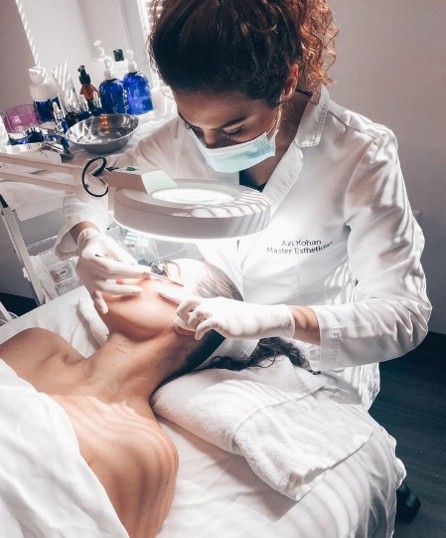
Why Hands-On Training on Live Patients is Crucial for Mastering Facial Aesthetics
“Textbooks can teach you the ‘why,’ but only a live patient can teach you the ‘how’ when a needle is inches from a facial nerve.”
The leap from standard medical practice to aesthetic mastery is not merely a change in specialty; it is a shift in paradigm. For doctors, dentists, and dermatologists entering the field of clinical cosmetology, theoretical knowledge of anatomy is simply the baseline. In aesthetic medicine, the canvas is alive, breathing, and inherently unpredictable. To truly excel, practitioners must move beyond the static pages of medical literature and engage directly with the dynamic biological variables of real human tissue. Hands-on training on live patients is the defining line between a competent practitioner and a master of facial aesthetics.
The Myth of the Mannequin: The Biological Variability Factor
Many foundational courses rely heavily on synthetic models and 3D virtual reality content to teach injection techniques. While tools like interactive 3D anatomy are excellent for visualizing the deep plane face and neck, they fundamentally fail to replicate the most critical aspect of aesthetic medicine: tissue resistance and biological variability.
No two faces age exactly the same way. When treating a live patient, an aesthetic physician must constantly assess variable skin elasticity, unique facial fat distribution, and individual muscle strength. The facial retaining ligaments zone—the fibrous bands that connect bone to skin—varies significantly in tension and depth from person to person. A mannequin cannot teach you how to adjust the extrusion force of a dermal filler when transitioning from the dense dermis to the softer subcutaneous fat. Only hands-on experience allows a practitioner to develop the crucial tactile feedback required to deliver natural, harmonious results.
Advanced Anatomy: Navigating the Deep Planes
Global leaders in aesthetic education, such as the renowned Mayo Clinic programs, emphasize that mastering facial procedures requires an in-depth understanding of complex, deep-tissue anatomy. Even if your focus is on non-surgical interventions like neuromodulators and fillers, a surgical-level understanding of the face is non-negotiable.
During rigorous live-patient training, doctors learn to accurately identify and navigate critical anatomical landmarks in real-time. You are trained to conceptualize the deep plane (Sub-SMAS) areas, mapping out the premasseteric space, prezygomatic space, and preseptal space beneath the skin. When performing advanced tear-trough corrections or cheek augmentations, recognizing the exact location of the orbital septum, trough ligament, and orbicularis retaining ligament ensures the product is placed perfectly to restore volume without causing unnatural puffiness.
Furthermore, when addressing the lower face and neck—a highly requested area for modern rejuvenation—practitioners must understand the relationship of vascular pedicles and facial nerve branches. Practicing on live patients under expert supervision ensures you can safely navigate around the anterior platysma and deep neck fat compartments, mitigating the risk of severe complications.
Tactile Feedback and Complication Management
The stakes in clinical cosmetology are exceptionally high. A miscalculation of a few millimeters can lead to vascular occlusion, nerve damage, or severe asymmetry. Theoretical study cannot prepare a doctor for the “feel” of a needle gently breaching the periosteum, or the subtle resistance of scar tissue from a previous trauma.
Hands-on training allows doctors to safely practice critical techniques like aspiration (checking for blood return) in a controlled environment. More importantly, it teaches real-time complication management. Recognizing the immediate blanching of skin that signals vascular compromise—and knowing exactly how to respond with dissolving protocols—is a skill that must be witnessed and practiced in a clinical setting, not just read about in a protocol manual.
Integrating Rejuvenation: From Fat Grafting to Lasers
Modern aesthetic mastery is rarely about a single treatment modality; it is about comprehensive facial skin resurfacing and regeneration. Recognizing the role of skin resurfacing in facial rejuvenation is vital. Through hands-on practice, doctors learn how to properly layer treatments.
For example, understanding how to pair the structural support of dermal fillers (or the principles of fat grafting) with the textural improvements of advanced laser skin resurfacing requires clinical judgment. Working on live patients teaches practitioners how to assess skin types, manage thermal damage safely, and customize settings to clear pigmentation and tighten the skin matrix without causing post-inflammatory hyperpigmentation.
The Masterclass Advantage: Bridging the Gap
Theoretical knowledge gives you a license, but clinical confidence builds your practice. To offer high-yield procedures safely, you need an educational environment that prioritizes supervised, real-world execution.
The Masterclass in Facial Aesthetics and Cosmetology at IICAD is specifically engineered to bridge the gap between medical theory and aesthetic reality. We prioritize extensive hands-on training on diverse live patient models, ensuring our graduates leave with the muscle memory, anatomical precision, and clinical confidence required to build a highly profitable, reputable aesthetic enterprise.
Secure Your Hands-On Experience
Do not leave your aesthetic education to theory. Master the art and science of facial transformation with the industry’s leading clinical experts. Contact us today to secure your seat in our upcoming masterclass cohorts.
International Institute of Cosmetology, Aesthetics & Dentistry (IICAD) – Bangalore
- Address: Bus Stop, 212, 2nd floor, 4th Main Rd, opposite ESI dispensary, near VivekNagar, P.O, Vivek Nagar, Karnataka 560047
- Phone: 06364636662