
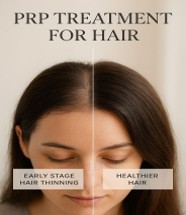
Mastering PRP Therapy and Exosomes for Hair Loss: A Step-by-Step Guide for Doctors
“Liquid gold and cellular messengers are replacing the scalpel as the first line of defense against hair loss.”
For decades, the medical management of androgenetic alopecia (AGA) relied almost exclusively on topical minoxidil and oral finasteride. While these remain FDA-approved staples, the aesthetic landscape of 2026 is rapidly shifting toward regenerative medicine. Patients are increasingly seeking solutions that heal the body at a cellular level, demanding treatments that offer superior hair density without daily pharmaceutical reliance or immediate surgical intervention.
For general practitioners, dermatologists, and aesthetic doctors, mastering advanced injectable therapies—specifically Platelet-Rich Plasma (PRP) and Exosome therapy—is no longer optional; it is a clinical necessity. These treatments offer immense therapeutic value to the patient and a highly predictable, recurring revenue stream for your clinic.
Here is a step-by-step clinical guide to understanding, comparing, and mastering the application of these breakthrough regenerative hair therapies.
Step 1: Understanding the Target—Follicular Miniaturization and the Growth Cycle
Before injecting any regenerative biologic, a doctor must understand the precise mechanism of hair loss. In conditions like AGA, dihydrotestosterone (DHT) binds to receptors in the dermal papilla, suppressing the vital Wnt/β-catenin signaling pathway.
This suppression prematurely pushes hair follicles out of the active growth phase (Anagen) and into the resting and shedding phases (Catagen and Telogen). Over successive cycles, the hair shaft becomes thinner, shorter, and less pigmented—a process known as follicular miniaturization. The primary goal of both PRP and Exosome therapy is to reverse this miniaturization by aggressively extending the Anagen phase and waking up dormant follicular stem cells.
Step 2: Mastering Platelet-Rich Plasma (PRP) — The Autologous Standard
Platelet-Rich Plasma, often referred to as “liquid gold,” has been heavily validated by randomized controlled trials up to 2026 as a highly effective, autologous (patient-derived) therapy for hair thinning.
Mastering PRP requires precision in phlebotomy, centrifugation, and injection depth. When processed correctly, the concentrated plasma yields a massive dose of alpha granules containing essential growth factors.
To ensure maximum clinical efficacy, doctors must focus on these key mechanisms:
- Vascular Endothelial Growth Factor (VEGF): Promotes angiogenesis, creating new blood vessels around the miniaturized follicle to increase oxygen and nutrient delivery.
- Platelet-Derived Growth Factor (PDGF): Stimulates the proliferation of dermal fibroblasts, reinforcing the structural matrix of the scalp.
- Safety Profile: Because PRP utilizes the patient’s own blood, there is zero risk of allergic reaction or tissue rejection, making it a highly trusted first-line therapy.
The Exosome Revolution — 2026’s Nano-Messenger Technology
While PRP relies on the patient’s existing biological age and blood quality, Exosome therapy represents the cutting edge of cell-free regenerative medicine.
Exosomes are microscopic extracellular vesicles (roughly 30 to 150 nanometers in diameter—a thousand times smaller than a human hair). Extracted primarily from mesenchymal stem cells (or highly purified plant sources), they act as targeted delivery packages. They contain a potent cocktail of hundreds of growth factors, messenger RNA (mRNA), and microRNAs, but without the cellular DNA that can cause immune rejection.
Why are Exosomes considered a game-changer for severe hair loss?
- Direct Pathway Activation: Recent clinical reviews confirm that exosomes directly activate the Wnt/β-catenin pathway in dermal papilla cells, bypassing the DHT blockade more aggressively than PRP.
- Anti-Inflammatory Action: They deliver Transforming Growth Factor Beta 3 (TGF-β3), which polarizes macrophages into an anti-inflammatory state, rapidly resolving scalp conditions that accelerate hair fall.
- Speed of Efficacy: Because exosomes are so small, they penetrate cellular membranes rapidly. Patients often report a drastic reduction in hair shedding within the first month, compared to the 3-to-4-month wait time typical of standard PRP.
To visualize how these two therapies differ in stimulating hair density and extending the active growth phase over a clinical timeline, explore the interactive medical comparison tool below:
Clinical Application and Delivery Methods
Knowing what to inject is only half the science; knowing how to deliver it dictates the result. Advanced training teaches practitioners the optimal depth required to reach the hair bulge, where stem cells reside (typically 1.5mm to 2.5mm into the dermis).
- Direct Micro-Injection: Utilizing ultra-fine needles (30G or 32G) to deposit PRP or Exosome serum directly into the sub-dermal layer. This requires a steady hand and a deep understanding of scalp tension to minimize patient discomfort.
- Microneedling (MTS): Often used in conjunction with Exosomes. A motorized micro-pen creates thousands of micro-channels in the scalp, triggering a localized wound-healing cascade while simultaneously allowing the topical exosome serum to penetrate deeply into the follicle.
Treatment Stacking for Maximum Clinical ROI
The most successful modern aesthetic clinics do not offer these treatments in isolation. They practice “Treatment Stacking.”
By combining the immediate stem-cell signaling of Exosomes with the sustained nutritional support of PRP, doctors create an unparalleled regenerative environment. Furthermore, prescribing adjunctive therapies—such as low-level light therapy (LLLT) and medical-grade nutraceuticals—ensures the newly activated follicles receive the energy required to sustain thick, terminal hair growth.
From a business perspective, structuring 3-to-6-month comprehensive “Hair Restoration Packages” transforms your practice from a transactional clinic into a high-value, results-oriented medical destination.
Elevate Your Practice with Expert Training
To truly master the art of the follicle, medical professionals must move beyond theory and acquire supervised, hands-on clinical experience. In a field where results are highly visible, your injection technique and diagnostic accuracy are your strongest marketing tools.
The International Institute of Cosmetology, Aesthetics & Dentistry (IICAD) provides doctors with the rigorous, practical training necessary to execute these advanced regenerative protocols safely and effectively. By integrating these high-demand therapies into your repertoire, you position yourself at the forefront of modern trichology.
To gain comprehensive hands-on experience and learn the exact protocols used by top global clinics, explore the detailed curriculum of our Masterclass in Hair Transplant in Bangalore and specialized trichology modules.
Contact Our Campuses for Admission Information
Bangalore
- International Institute of Cosmetology, Aesthetics & Dentistry IICAD
- Address: Bus Stop, 212, 2nd floor, 4th Main Rd, opposite ESI dispensary, near VivekNagar, P.O, Vivek Nagar, Karnataka 560047
- Phone: 06364636662