
How a Fellowship in Oral & Maxillofacial Implantology Elevates Your Practice
“Implants are the foundation of modern dentistry—build your career on a bedrock of surgical expertise.”
Dentistry is an incredibly dynamic and rapidly evolving field in healthcare. Gone are the days when a general dental degree alone was sufficient to meet the complex aesthetic and functional demands of modern patients. Today, individuals do not just want to replace missing teeth with removable dentures, nor do they want bridge preparations that compromise adjacent, perfectly healthy enamel. They demand permanent, biomechanically sound, and aesthetically flawless solutions. Because of this profound shift in patient expectations, dental implants have become the undisputed gold standard of oral rehabilitation.
However, the surgical placement and prosthetic restoration of dental implants involve a steep learning curve that standard dental school curricula often cannot comprehensively cover. To safely, predictably, and successfully integrate these high-yield procedures into a daily clinical workflow, a practitioner must pursue rigorous postdoctoral education. This is where a comprehensive Fellowship in Oral & Maxillofacial Implantology becomes the defining turning point in a dentist’s career, elevating a standard practice into a premium surgical destination.
What Exactly is a Dentistry Fellowship?
A fellowship is a graduate-level educational opportunity designed specifically for dental professionals seeking advanced, highly specialized clinical experience. Unlike a weekend seminar or a brief online certification course—which merely scratch the surface of surgical protocols—an implant fellowship is an intense, immersive, and comprehensive program. It focuses heavily on the intersection of oral and maxillofacial surgery, advanced periodontics, preventive dentistry, and restorative prosthodontics.
The primary objective of a fellowship is to prepare the dentist to become an authoritative leader in their field of specialization. After completing this postdoctoral experience, the practitioner will possess specialized knowledge and surgical skills far beyond their foundational training. They develop a deep, comprehensive understanding of how to evaluate complex anatomical structures, treat patients with severe periodontitis and bone loss, and manage systemic conditions that dictate specialized protocols for implant success.
Fellowship programs in dentistry are highly respected, but they require commitment. To apply for a fellowship, one must first complete a minimum of three years of dental education and training at an accredited dental school. These programs are highly accessible to both current dental program residents looking to carve out a surgical niche immediately, as well as established, veteran dentists who want to return to an academic setting to modernize their practice and expand their service offerings.
Duration and Clinical Immersion
How long does a dental implant fellowship last? The length of a dental implant fellowship varies depending on the structure of the program, the academic and personal goals of the practitioner, and the volume of clinical cases required for certification. Most traditional university-based fellowships can last about two years. However, intensive, highly focused clinical fellowships offered by specialized institutes can be completed in a concentrated 6-month to 1-year timeframe.
These immersive formats are particularly advantageous for practicing dentists, as they allow driven professionals to rapidly acquire necessary surgical skills and implement them directly into their private practice without prolonged career interruption or loss of clinical income.
The Clinical Benefits: Moving Beyond the Basics
A high-quality fellowship moves well beyond the basic theory of implant dentistry. As a fellow, you receive in-depth, hands-on training under the direct supervision of an expert faculty. You can expect to work alongside diverse mentors and students from all over the world, gaining invaluable real-life experience on live patients. This robust training covers the entire spectrum of surgical and restorative implantology:
- Advanced Diagnostics and 3D Imaging: You will master the interpretation of Cone Beam Computed Tomography (CBCT) scans. Understanding 3D anatomy is critical to accurately mapping out the inferior alveolar nerve, navigating sinus cavities, and measuring bone density to prevent catastrophic surgical errors.
- Surgical Site Preparation and Grafting: Implants require a solid bedrock. You will learn critical adjunctive procedures such as direct and indirect sinus lifts, guided bone regeneration (GBR), and soft tissue grafting (like connective tissue grafts) to ensure the implant has a healthy, stable, and aesthetically pleasing foundation.
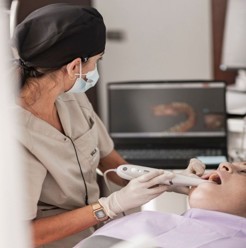
- Digital Workflow and Surgical Guides: Modern implantology relies heavily on digital precision. Fellowships teach the integration of intraoral scanners and the fabrication of 3D-printed surgical guides. This technology allows for “flapless” surgeries and precise angulation, drastically reducing patient recovery time and surgical morbidity.
- Complication Management: The true hallmark of a master surgeon is not just placing the implant under ideal conditions, but knowing exactly how to manage peri-implantitis, rescue failing grafts, and navigate complex anatomical challenges when things do not go exactly as planned.
The Business Impact: Elevating Clinic Revenue and Employability
With dental practices becoming increasingly high-tech, the demand for certified implantologists is on an unprecedented rise. Completing this program offers immediate, tangible benefits to your professional trajectory and your clinic’s financial health.
First, a fellowship drastically increases your employability in premium clinical environments. You will have specialized training that many of your peers do not possess. If you are an associate dentist, this certification makes you an invaluable, high-revenue-generating asset to any clinic.
For practice owners, the benefits are exponential. Dental implant fellowships are ideal for up-and-coming dental practices that are not yet certified in the field but aim to position themselves as comprehensive, multi-specialty centers. By acquiring these skills, you retain high-ticket procedures in-house rather than referring them out to external oral surgeons or periodontists. This not only significantly boosts your clinic’s gross revenue but also improves patient satisfaction, as patients vastly prefer having all their treatments completed under one roof by a doctor they already trust. The fellowship perfectly complements a general practice, serving as the bridge to lucrative, premium surgical dentistry.
Secure Your Future with Strategic Education
Are you ready to start your dental implant fellowship? Finding a program that provides high-quality, comprehensive training beyond the basics is the most important investment you can make in your professional future. You want an education that teaches you about cutting-edge technology, holistic patient care, and how to definitively determine if an implant is the best functional option for your patient.
For practitioners ready to elevate their surgical standards, the Fellowship in Oral & Maxillofacial Implantology at IICAD provides an elite, hands-on curriculum tailored for ambitious doctors. By prioritizing live-patient surgical experience and advanced digital protocols, the program ensures that graduates return to their clinics ready to operate with supreme confidence.
Take the definitive step toward clinical mastery and financial growth. Connect with our academic coordinators to secure your seat in the upcoming fellowship cohort.
Bangalore Institute:
International Institute of Cosmetology, Aesthetics & Dentistry
Address: Bus Stop, 212, 2nd floor, 4th Main Rd, opposite ESI dispensary, near VivekNagar, P.O, Vivek Nagar, Karnataka 560047
Phone: 06364636662